Tutorials
Tutorial 1(TA210)
AIDT: Generative AI-Powered Digital Twin for Smart City Management
Abstract: Under the "Belt and Road" initiative, the development of sustainable Smart Cities is paramount to addressing the challenges of rapid urbanization. However, traditional digital twin technologies for Smart City management often suffer from high modeling costs and a lack of cognitive autonomy. To bridge this gap, we propose AIDT, a Generative AI-powered framework designed to serve as the intelligent core of Smart Cities. By synergizing pervasive crowd sensing technology for cost-effective urban 3D reconstruction with Large Language Models (LLMs) for autonomous reasoning, AIDT empowers cities with the ability to "perceive, think, and act". We demonstrate the practical applications of AIDT in cognitive energy internets (Green Computing), adaptive traffic simulation, and intelligent emergency response. By closing the loop of "Perception-Cognition-Decision", AIDT provides a scalable, sustainable, and intelligent new paradigm for next-generation Smart City management.
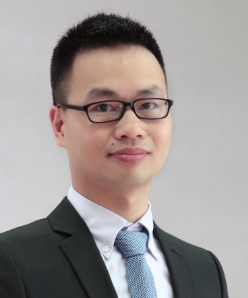
Profile: Longbiao CHEN is an associate professor with Department of Computer Science, Xiamen University, China. He obtained his Ph.D. degree in computer science from Sorbonne University, France in 2018 and Zhejiang University, China in 2016, respectively. Before joining Xiamen University, he worked as a research assistant in Institut Mines-Télécom, France. His research interests include Ubiquitous Computing, Mobile Crowdsensing, Urban Computing, and Big Data Analytics. Dr. Chen has published over 70 papers in top-tier journals and conferences, including ACM UbiComp, IEEE Trans. Mobile Computing, and IEEE Trans. Intelligent Transportation Systems. He received two UbiComp Honorable Mention Awards in 2015 and 2016, respectively. He is a senior member of China Computer Federation (CCF), technical committee member of ACM SIGSPATIAL China Chapter and CCF Ubiquitous Computing Committee. He serves as the Editor-in-Chief of Big Data Research, an Editorial Board Member for international journals such as FSC and Vehicles, and a Program Committee Member for premier international conferences including AAAI and IJCAI.
Tutorial 2(TA211)
A New Paradigm for Smart Sensing: Ultra-High-Precision Microstate Sensing Based on Moiré Pattern

Abstract: Conventional computer vision typically reaches only pixel-level precision, making it difficult to achieve super-resolution sensing of the 3D microscopic world. As a result, exploring ultra-high-precision spatial sensing remains a long-standing research ambition. This talk presents a new paradigm for visual perception: an ultra-precise microstate sensing technology enabled by moiré-based vision. Moiré patterns arise from high-frequency interference on image sensors and have been treated as visual interference to be removed. In contrast, the speaker’s group adopts a different perspective by transforming moiré patterns from noise into a meaningful signal, turning traditional “suppression” into “enhancement”. By leveraging the exceptional sensitivity of moiré patterns to subtle camera pose variations, they establish a mapping between microstate parameters and moiré features. This approach enables robust microstate sensing across diverse environments, and provides theoretical support for overcoming current limits of visual resolution. The talk will also highlight recent advances and applications of moiré-based research in areas such as intelligent manufacturing and smart healthcare.
Profile: Jingyi Ning received her Ph.D. from Nanjing University in 2024 and conducted a research visit at Nanyang Technological University in Singapore during her doctoral studies. She is currently an Assistant Researcher Fellow at the School of Computer Science, Nanjing University. Her research focuses on the Internet of Things, smart sensing, and mobile computing. In recent years, she has published more than twenty papers in international conferences and journals such as ACM MobiCom, ACM UbiComp, IEEE INFOCOM, IEEE JSAC, and IEEE TMC, including three representative first-author papers in MobiCom. She has received the ACM China Excellent Doctoral Dissertation Award in 2025, a nomination for the Top Ten Scientific Advances in the Internet of Things in 2025, and the Best Paper Award at PCC 2025.