Keynote Speakers
Keynote 1
Foundation Models for Time-Series and Spatio-Temporal Data

Prof. Flora Salim
This talk explores the foundations of AI for time-series and multimodal sensor data, emphasizing the pressing challenges and frontier solutions for real-world spatio-temporal learning. Time-series data from sensors in domains such as transport, energy, and urban systems are often riddled with missing values, heterogeneity, irregular sampling, high noise, and label scarcity. These issues are compounded by modality differences across sensors, domain shifts, and dynamic environments.
We present a comprehensive overview of recent advances, grounded in a series of foundational works. We also introduce massive traffic forecasting, building IoT time-series, and human mobility datasets and benchmarks, as well as pretrained models for generalizable spatio-temporal inference across diverse urban contexts. The talk further covers advances in Neural ODEs to handle irregular and streaming time-series efficiently.
Bio: Flora Salim is a Full Professor at UNSW Sydney and Deputy Director of the UNSW AI Institute. Her research focuses on multimodal machine learning and foundation models for time-series and spatio-temporal data, robust and trustworthy machine learning, and AI for smart and sustainable cities. She is a member of the Australian Academy of Sciences’ National Committee for Information and Computing Sciences and the ARC College of Experts. She has served on editorial boards of ACM TIST, ACM TSAS, PACM IMWUT, IEEE Pervasive Computing, Nature Scientific Data, and Machine Learning journal.
Keynote 2
Low-Cost Sensing for Everyday Verification
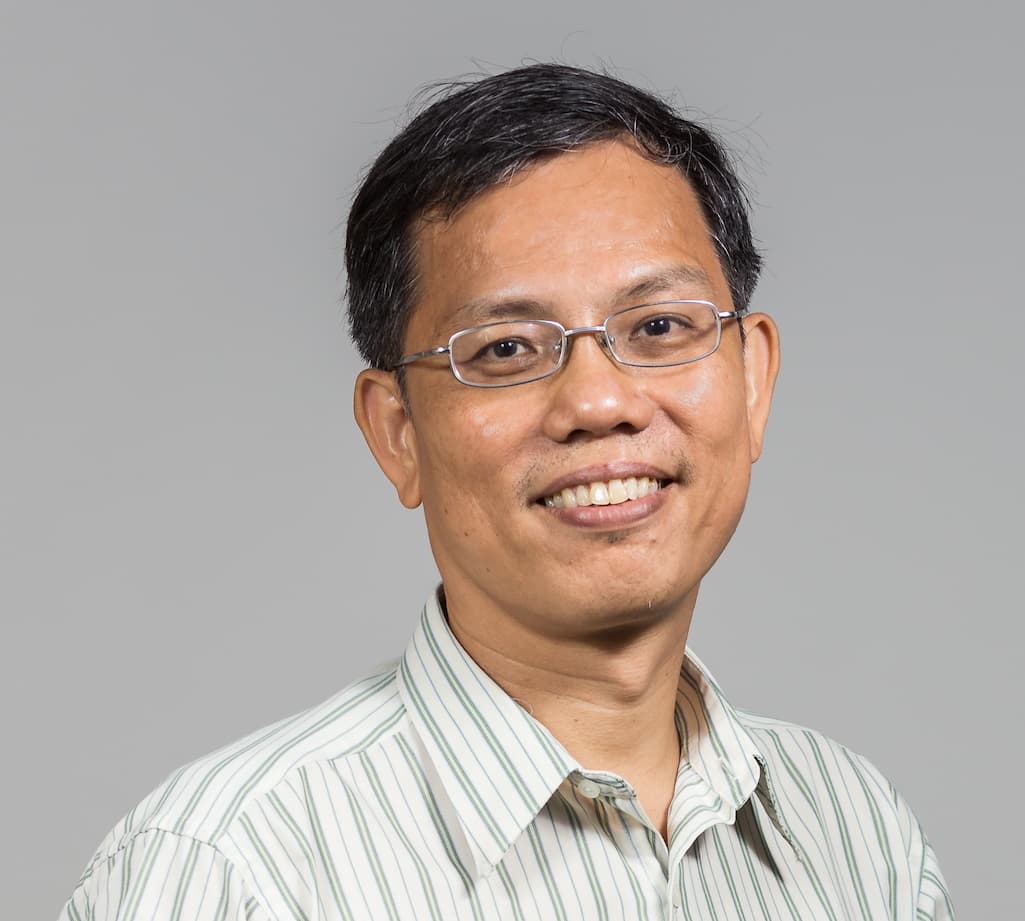
Prof. Mun Choon Chan
Abstract: Commodity devices such as smartphones and wearables can harvest rich but noisy physical signals. When properly modeled, these signals reveal fine-grained physical phenomena and turn everyday devices into dependable tools for measurement and verification. This talk presents research on how physical signal models fused with lightweight learning allow commodity sensors — acoustic, optical, inertial — to detect counterfeit liquid products, test mask filtration efficiency, and build virtual keyboards. These works demonstrate that embedding physical insight into inexpensive platforms can enable reliable sensing applications without costly instrumentation.
Bio: Mun Choon Chan received a BS from Purdue University and a Ph.D. from Columbia University. He previously worked at Bell Labs and is currently Professor and Vice Dean of Graduate Studies at the School of Computing, National University of Singapore. He is also Lab Director of the NUS-NCS Joint Laboratory. He has won best paper awards at ICNP 2019, SOSR 2019, and ICDCN 2016, and the Facebook Networking Systems Research Award in 2019. His research interests include mobile sensing, programmable networks, and 5G networks.
Keynote 3
Pervasive Technologies for Animal Behavior Understanding
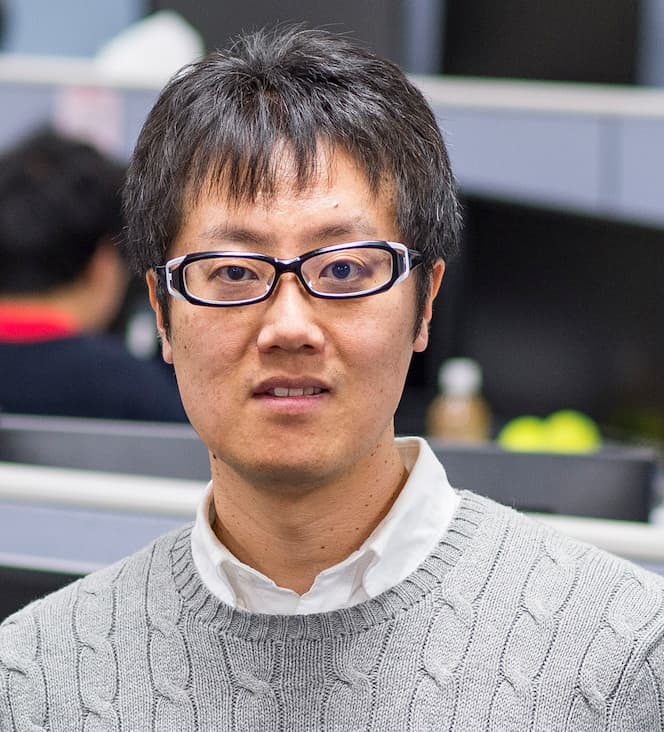
Prof. Takuya Maekawa
Abstract: This keynote introduces our recent efforts to advance animal behavior research through pervasive sensing and AI-enabled analytics. Biologists widely attach GPS, accelerometers, and cameras to animals, yet significant challenges remain in designing lightweight, power-efficient devices and in extracting insights from large behavioral datasets. We present our AI-augmented bio-loggers that selectively activate high-cost sensors only during meaningful events, enabling smaller batteries and minimizing impact on animals. We also introduce a deep learning platform that uses attention-based models to highlight trajectory segments that distinguish individuals or groups. These technologies show how AI and IoT can transform the way we capture and interpret behavior in the wild.
Bio: Takuya Maekawa is a professor at the Institute for Advanced Co-Creation Studies, the University of Osaka. In 2006, he received his doctor degree from Graduate School of Information Science and Technology, Osaka University. He then worked at NTT Communication Science Laboratory for six years. His research interest includes sensor-based context recognition techniques for ubiquitous/wearable computers. He has served as Associate Editor of ACM IMWUT and TPC member of PerCom.
Keynote 4
Secure and Privacy-Preserving RAG as a Service
Prof. Jianliang Xu
Abstract: Retrieval-Augmented Generation as a Service (RAGaaS) provides a new paradigm for enhancing large language models with proprietary or real-time external knowledge. However, this service model raises serious privacy concerns, as sensitive user queries are exposed to the provider. This talk analyzes the privacy and security challenges of RAGaaS and highlights the fundamental trade-off between effective knowledge augmentation and confidentiality. We introduce cryptographic and architectural approaches designed to mitigate these risks, followed by promising future research directions on privacy-preserving RAGaaS.
Bio: Prof. Xu is a Chair Professor and Head of the Department of Computer Science at Hong Kong Baptist University. His research interests include databases, blockchain, applied AI & LLM, and data security & privacy. He has published over 300 papers (H-index 65) in venues such as SIGMOD, PVLDB, KDD, and TKDE, with research funding exceeding HK$40 million. He has served as Associate Editor of IEEE TKDE, IEEE TBD, IEEE TPDS and PVLDB, and is a Fellow of IEEE.